
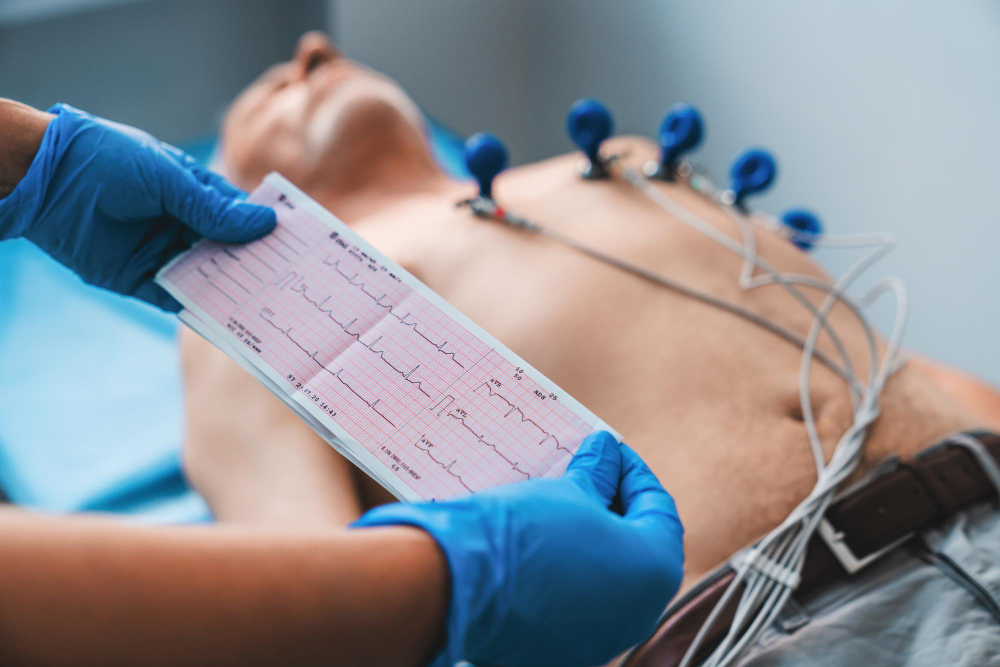
What is an ECG?
An ECG, or electrocardiogram, is a simple test that checks your heart’s electrical activity. Doctors use it to see how your heart is working. The test records the heart’s rhythm and helps find any problems. Many people call it an “ECG test” or “heart tracing.” It is quick, painless, and safe.
Why is an ECG Done?
Doctors may suggest an ECG for several reasons. For example, you might have symptoms like chest pain, shortness of breath, or a fast heartbeat. Sometimes, an ECG is part of a routine check-up. It can also help:
In many cases, an ECG helps doctors decide on the next steps for your care.
How Does an ECG Work?
Every heartbeat sends out tiny electrical signals. An ECG machine picks up these signals using small, sticky pads called electrodes. These pads go on your chest, arms, and legs. The machine then draws a line on paper or a screen. This line shows the pattern of your heart’s beats. Because the test is quick and easy, many clinics offer “ECG test near me” services.
What to Expect During an ECG
Getting an ECG is simple. Here’s what usually happens:
Usually, the whole ECG procedure takes less than 10 minutes. You do not feel any pain. Sometimes, the pads may feel cold or pull a little when removed.
Understanding ECG Results
After the test, a doctor looks at your ECG results. The lines on the paper or screen show how your heart is working. Here’s what they check for:
Sometimes, your ECG may look normal even if you have heart symptoms. In that case, your doctor may order more tests. On the other hand, a change in your ECG does not always mean something is wrong. Only a doctor can explain your results fully.
Risks and Safety of ECG
Many people ask, “Is ECG safe?” The answer is yes. An ECG is very safe. It does not send electricity into your body. Instead, it only reads the signals your heart makes. There are no serious risks. Rarely, you may get mild skin irritation from the sticky pads. However, this goes away quickly. There is no risk of electric shock or harm from the test.
When to Consult a Doctor
If you have chest pain, trouble breathing, or feel dizzy, you should see a doctor right away. These could be signs of a heart problem. Even if your ECG is normal, you may still need more tests. For example, if you have a family history of heart disease, talk to your doctor about getting an ECG. Early testing can help find problems before they get worse.
Conclusion
In summary, an ECG is a quick and safe test that helps doctors assess your heart’s health. It is painless and provides important information about your heart’s rhythm and function. If you have questions or symptoms, consult a healthcare professional at Dr. Noshina Diagnostic Centre for personalised advice about ECGs and heart health.